Minimizing Waste, Maximizing Freshness: Baby Food Pouches
Baby food pouches, a type of spouted pouch containing fruit purees and complementary foods for babies. A persistent concern for parents has been: are these baby food pouches safe? Given their intended use for infants, standards are naturally far stricter. Attention extends beyond mere safety to encompass ingredients, processing methods, and storage protocols, ensuring every stage meets requirements. Numerous companies currently offer such products, including Gerber, Heinz, and Bellamy’s. The fruit puree itself is typically supplied by food manufacturers, while the outer packaging requires separate procurement.
How do food companies select reliable suppliers? If a company specialises in fruit puree products, it should have established long-term suppliers. For newly expanded product lines, consideration must be given to whether existing suppliers possess expertise in this specific field, or whether it is necessary to seek out new suppliers specialising in flexible packaging for baby fruit purees. The choice of outer packaging is also crucial. It not only represents the brand’s image externally but also impacts product quality, which in turn affects the company’s reputation and sales performance.
Food companies should possess a relatively comprehensive understanding of the entire process, such as sterilisation techniques: hot filling and high-temperature pasteurisation. For conventional fruit puree products, preference should be given to hot filling or the more advanced aseptic cold filling process.
Only when the product formulation is no longer highly acidic (e.g., due to significant additions of vegetables or grains raising the pH), or when texture and flavour are not paramount considerations and an exceptionally long shelf life is the sole objective, should the 121°C high-temperature sterilisation process be considered. In such cases, significant alterations to product quality must be anticipated.
Professional outer packaging suppliers can offer specialised advice on sterilisation processes for various products, along with suitable materials and thicknesses. Henan Baolai has specialised in baby food packaging for 20 years, having handled numerous related orders. Please feel free to contact us with any queries!

Although it utilises less plastic than conventional packaging, it still exerts an environmental impact. In response to contemporary trends, some flexible packaging and raw material manufacturers are developing more environmentally friendly materials, exploring the potential and applicability of innovative combinations of eco-conscious materials.
1. The shift towards sustainability has led to remarkable advancements in biodegradable materials.
Polylactic Acid (PLA) and Polyhydroxyalkanoates (PHA) stand out with over 80% biodegradation rates under optimal conditions. These materials are derived from renewable resources like corn starch and sugarcane, offering a viable alternative to traditional plastics.
2. Metpack, in collaboration with BASF, has developed a home-compostable coated paper using ecovio® 70 PS14H6.
This innovative material meets EN 13432 certification standards, ensuring it breaks down in home compost within 180 days.
3. Heinz’s Recyclable Polypropylene Pouch
Heinz has introduced a game-changing recyclable polypropylene pouch in the UK. This innovative packaging can be recycled through standard household recycling programs, diverting an estimated 20 tonnes of plastic from landfills annually. The pouch features a simple, mono-material design that maintains product freshness while ensuring easy recyclability.
4. Once Upon a Farm’s PE Recyclable Spout Pouch
Once Upon a Farm has partnered with Cheer Pack and Amcor to develop an all-PE recyclable spout pouch. This packaging solution reduces plastic usage by 30% compared to traditional designs. The company aims to roll out this sustainable packaging across its entire product line by 2025, demonstrating a strong commitment to environmental stewardship.
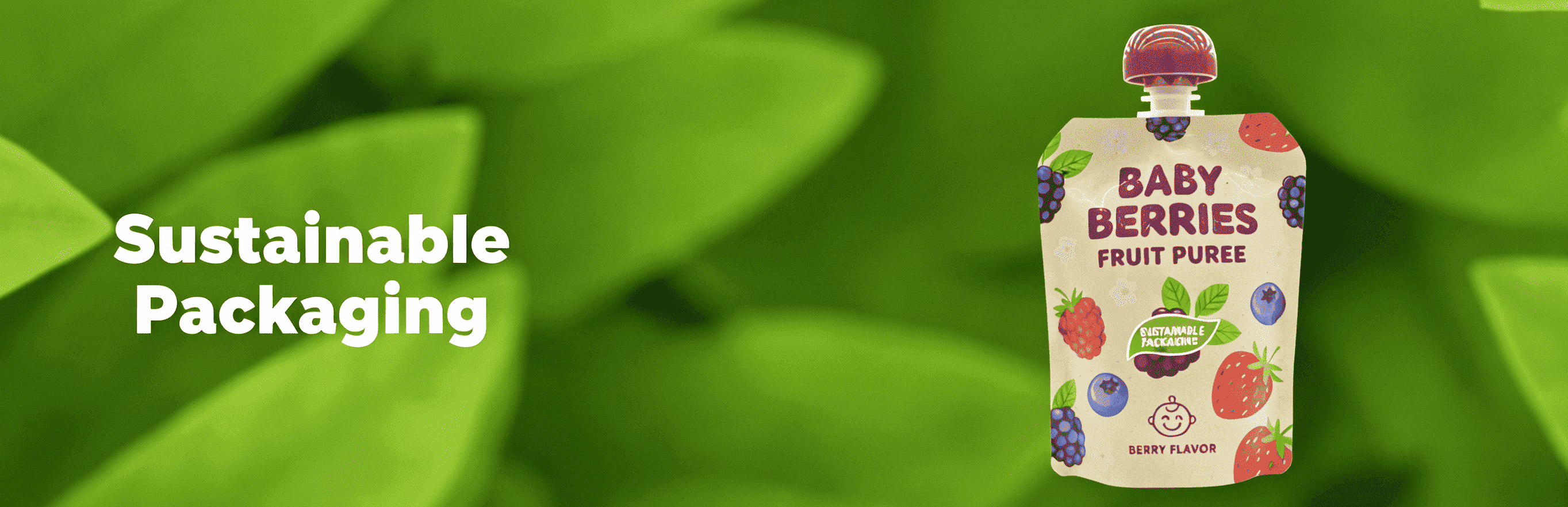
Conclusion: Flexible packaging remains the dominant trend
Owing to its inherent advantages and innovations that align with contemporary demands, flexible packaging will continue to occupy a significant share of the baby food packaging market in the years ahead.